Facing criminal charges as a juvenile can be frightening, both for the young person accused and for their family. In New Jersey, the juvenile justice system operates differently from the adult system, but the stakes are still incredibly high. A conviction in juvenile court can impact a child’s education, future job opportunities, and even their ability to get into certain colleges or join the military.
In Freehold, Point Pleasant, and throughout Monmouth County and Ocean County, juvenile cases are handled with a mix of rehabilitation and accountability, but the consequences can still be life-changing. Law enforcement and prosecutors in cities like Toms River, Asbury Park, Brick, and Long Branch take these cases seriously, often seeking penalties that include probation, community service, or even time in a juvenile detention facility.
At Mallon and Tranger, our experienced defense attorneys understand the unique challenges of juvenile cases. We work tirelessly to protect the rights of young clients, defend their futures, and guide their families through the entire legal process.
Juvenile Crime Cases We Handle
Juvenile offenses in New Jersey can range from relatively minor infractions to
serious felony-level crimes. Regardless of the severity of the allegations, any juvenile charge has the potential to create lasting consequences if it is not handled effectively. In Freehold, Point Pleasant, and other communities throughout Monmouth County and Ocean County, young people are charged with a wide variety of offenses every year. Some involve mistakes in judgment, while others may be the result of misunderstandings, peer pressure, or false accusations. At Mallon and Tranger, we understand the importance of protecting a juvenile’s future and ensuring that one incident does not derail a lifetime of opportunities.
We regularly defend juveniles in Freehold, Point Pleasant, and surrounding areas against charges such as:
- Theft and Larceny: This includes taking property without the owner’s permission, whether the property was taken from a retail store, a parked vehicle, or directly from another person. Even low-value theft charges can carry penalties that impact a juvenile’s record and may require restitution.
- Alcohol Offenses: Many juveniles face charges for underage possession or consumption of alcohol. These cases can also involve related offenses such as using a fake ID to purchase alcohol or being cited for public intoxication.
- Disturbing the Peace: Disorderly conduct, excessive noise, or other disruptive behavior in public spaces may lead to charges. In some cases, these charges stem from incidents at sporting events, concerts, or public gatherings.
- Drug Offenses: Juveniles may be charged with possession of marijuana, illegal possession of prescription medication, or other controlled substances. In more serious cases, distribution or intent to distribute charges may apply.
- Vandalism: This covers acts such as graffiti, defacing property, breaking windows, or damaging school property. The consequences can include fines, restitution, and community service.
- Assault: Fighting or causing injury to another person can result in charges for simple or aggravated assault. These charges can be elevated if weapons are involved or if the incident is considered gang-related.
- Robbery: Taking property by force or threat is considered robbery, which is treated as a very serious violent offense in New Jersey.
- Criminal Trespass: Entering or remaining on someone else’s property without permission can lead to this charge. It often arises from situations involving abandoned buildings, restricted construction sites, or school grounds after hours.
- Harassment: This includes repeated unwanted contact, verbal abuse, or cyberbullying. Harassment charges can arise from disputes between classmates, neighbors, or online interactions.
- Fraud: Using false information or deception for personal or financial gain, such as misusing a credit card or identity theft, may be charged as fraud.
- Burglary: Entering a building with the intent to commit a crime inside is burglary. It is considered more serious than trespassing because of the criminal intent element.
- Loitering: Remaining in a public place without a lawful purpose can lead to a loitering charge, particularly in areas with posted restrictions for minors.
Related: Attorney for Juvenile Shoplifting Charges in Freehold, New Jersey
Even charges that seem minor, such as disorderly conduct or loitering, can have serious implications if they result in a criminal record. In Freehold, Point Pleasant, and across Monmouth County and Ocean County, a juvenile conviction can affect educational opportunities, employment prospects, and even eligibility for certain programs or activities. Prompt legal intervention is critical to protect a juvenile’s record and future.

Penalties and Consequences of Juvenile Crime Charges
One of the first concerns parents raise when their child is accused of a crime in New Jersey is whether the minor can serve jail time. While juveniles are generally not sent to adult correctional facilities, they can be placed in juvenile detention centers if the court determines that the offense is serious or that the minor poses a threat to public safety. The severity and type of penalty depend on the nature of the offense, the juvenile’s prior record, and whether the incident is considered part of an ongoing pattern of misconduct.
Possible consequences of a juvenile conviction include:
- Juvenile Detention: This is confinement in a secure juvenile facility for a designated period of time. While these facilities focus more on rehabilitation than adult prisons, they still remove the minor from their home and can interrupt education and family life.
- Probation: Many juveniles in Freehold, Point Pleasant, and surrounding areas are placed on probation instead of detention. This requires regular check-ins with a probation officer and strict compliance with conditions such as attending school, obeying curfews, or avoiding certain people or places. Violations can result in harsher penalties.
- Community Service: Performing unpaid work for the benefit of the community is a common form of restitution. This can range from cleaning public areas in Monmouth County or Ocean County to participating in supervised volunteer programs.
- Fines and Restitution: Juveniles may be ordered to pay fines or reimburse victims for losses or damages. In many cases, parents or guardians are responsible for covering these costs, creating additional stress for the family.
- Educational Consequences: A juvenile conviction can result in suspension or expulsion from school, placement in an alternative education program, or loss of eligibility for extracurricular activities and athletics. These educational setbacks can have long-term effects on academic and career goals.
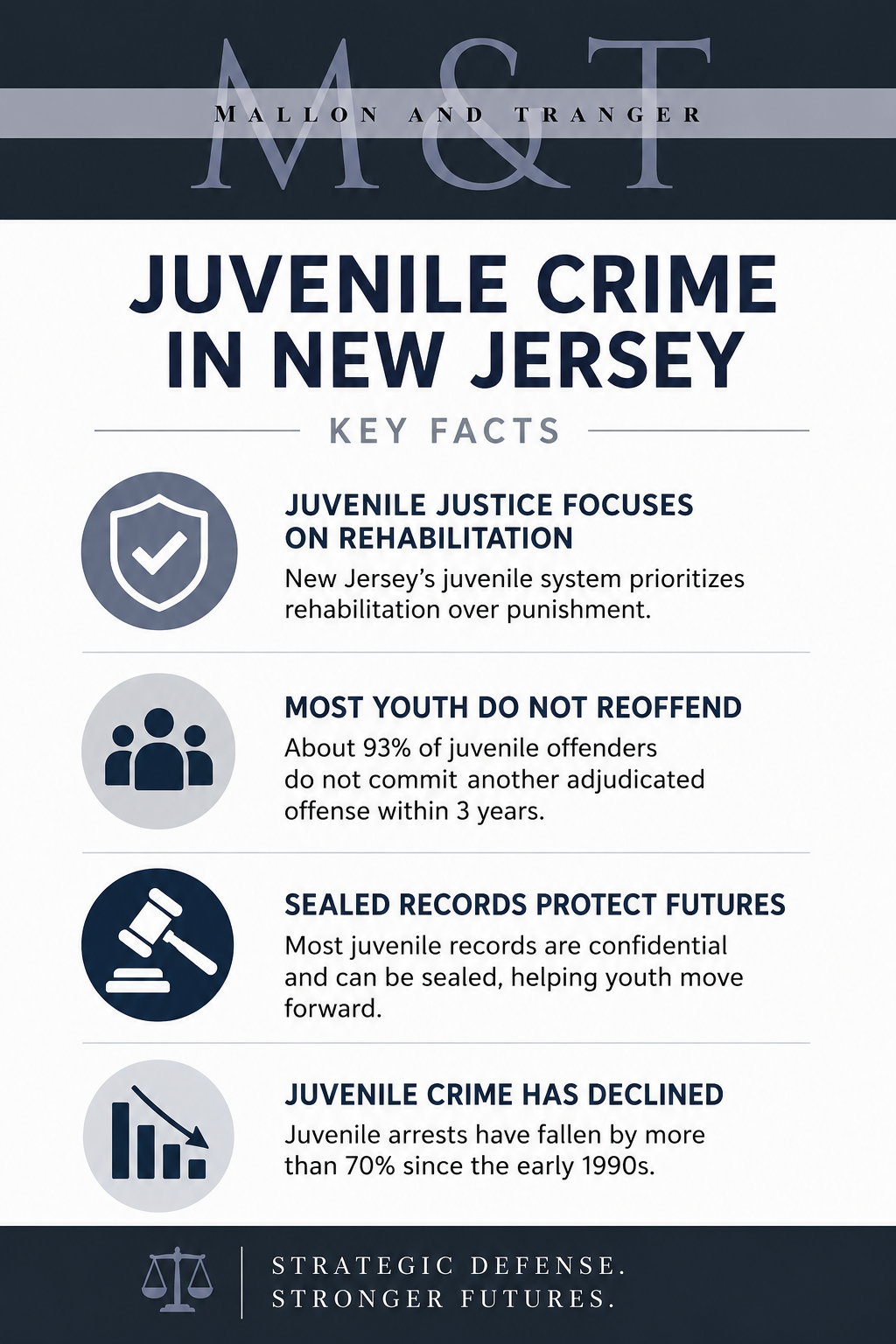
- Permanent Record: While many juvenile records are sealed once the minor reaches adulthood, certain offenses, especially violent crimes, can remain accessible to law enforcement, the military, and some employers. This can limit opportunities well into adulthood.
The impact on a juvenile’s future can be significant. Even a record from juvenile court can affect college admissions, scholarship opportunities, and employment prospects. In Freehold, Point Pleasant, and throughout Monmouth County and Ocean County, prosecutors may seek harsher penalties if they believe the offense reflects a pattern of criminal behavior rather than an isolated incident.
Alternative Sentencing and Diversion Programs for Juveniles in New Jersey
The New Jersey juvenile justice system is designed with an emphasis on rehabilitation rather than pure punishment. For many young people, especially first-time offenders, there are alternatives to detention that focus on correcting behavior, addressing underlying issues, and giving the juvenile a second chance without the burden of a permanent criminal record.
Common alternative sentencing and diversion options include:
- Juvenile Conference Committees (JCC): These are panels of trained community volunteers who meet with the juvenile, their parents or guardians, and, when appropriate, the victim. The committee recommends non-custodial resolutions such as community service, counseling, or educational workshops. Compliance with the recommendations can result in dismissal of the charges.
- Intensive Supervision Programs: These programs combine structured oversight with education, job training, and community involvement. They allow the juvenile to remain at home while still being closely monitored to ensure accountability and progress.
- Counseling and Treatment Programs: For juveniles dealing with substance abuse, mental health challenges, or behavioral issues, the court may order participation in therapy, rehabilitation programs, or anger management classes. These programs address root causes rather than just the symptoms of criminal behavior.
- Restorative Justice Programs: These focus on repairing the harm caused by the offense. Juveniles may participate in mediated meetings with victims, complete restitution payments, or engage in community service projects designed to benefit those affected by the crime.
An experienced juvenile defense attorney in Freehold or Point Pleasant can play a vital role in securing access to these programs. By presenting evidence of the juvenile’s positive attributes, family support, and willingness to comply with conditions, an attorney can often persuade prosecutors or judges in Monmouth County and Ocean County to approve diversion or alternative sentencing.
Alternative resolutions not only reduce the immediate penalties but also protect the juvenile’s future by avoiding a formal conviction. This approach aligns with the broader goal of the juvenile justice system in New Jersey, helping young people correct their mistakes and move forward without being defined by them.
How Can Mallon and Tranger Help Defend Juvenile Crimes
Facing a juvenile charge can be one of the most stressful and uncertain experiences a family will go through. The stakes are high, as a conviction or adjudication in juvenile court can have long-lasting consequences on education, employment, and overall life opportunities. An experienced criminal defense attorney not only defends the case in court but also guides the juvenile and their family through every step of the process, working to achieve the best possible outcome.
How defense attorneys help in juvenile cases:
- Protecting the Juvenile’s Rights: Juveniles have constitutional rights just like adults, but those rights can easily be overlooked or misunderstood in high-pressure situations. An attorney ensures that questioning by police is conducted lawfully, that the minor understands their right to remain silent, and that due process is respected at every stage of the case.
- Investigating the Case: A skilled defense attorney will thoroughly review all evidence, interview witnesses, and identify any inconsistencies or weaknesses in the prosecution’s case. This can involve reviewing surveillance footage, examining police reports for procedural errors, and even consulting with expert witnesses to challenge the evidence.
- Negotiating with Prosecutors: Many juvenile cases in Freehold, Point Pleasant, and surrounding communities can be resolved without going to trial. Attorneys negotiate to secure reduced charges, conditional dismissals, or entry into diversion programs that focus on rehabilitation rather than punishment.
- Representing the Juvenile in Court: From pretrial hearings to the final resolution, having an attorney present ensures that the juvenile’s side of the story is fully heard. A well-prepared defense can make the difference between detention and a chance to move forward with a clean slate.
Why Choose Mallon and Tranger
At Mallon and Tranger, our attorneys bring decades of combined legal experience to defending juveniles in Freehold, Point Pleasant, and throughout Monmouth County and Ocean County. Thomas J. Mallon has spent over 30 years representing clients in criminal defense matters and is recognized for his trial advocacy skills, meticulous case preparation, and commitment to protecting clients’ rights. Randall L. Tranger brings extensive courtroom experience, having handled thousands of cases in both municipal and Superior Courts across New Jersey.
We understand the unique nature of juvenile cases, where the focus should be on rehabilitation and safeguarding a young person’s future. Our firm’s strengths include:
- Proven Trial Experience: We have successfully defended clients in juvenile, municipal, and Superior Courts, developing strategies tailored to the facts of each case.
- Local Knowledge: We are deeply familiar with the judges, prosecutors, and procedures in Monmouth County and Ocean County, which allows us to anticipate the prosecution’s approach and prepare accordingly.
- Client-Focused Approach: We prioritize open communication, keeping families informed throughout the process, answering questions promptly, and making sure the juvenile understands what is happening at every stage.
- Aggressive Advocacy: We challenge questionable evidence, fight unfair charges, and work tirelessly to secure outcomes that protect our clients’ futures.
When your child’s freedom and future are at stake, having attorneys who combine legal skill with a genuine commitment to protecting young lives can make all the difference.
Additional Legal Services
In addition to defending juveniles against criminal charges, Mallon and Tranger offers experienced legal representation in a wide range of criminal defense matters, including:
- Drug Crimes
- Sex Crimes
- DUI Defense
- Police Brutality Cases
- White-Collar Crimes
- Violent Crimes
- And More
Our team is prepared to defend clients throughout New Jersey, including Freehold, Point Pleasant, and communities across Monmouth County and Ocean County, with the same level of dedication and strategic focus that we bring to every juvenile defense case.
Contact Mallon and Tranger for Trusted Juvenile Crime Defense in New Jersey
If your child is facing juvenile charges in Freehold, Point Pleasant, or anywhere in Monmouth County or Ocean County, it is essential to act quickly. Early involvement of an experienced juvenile defense attorney can make a significant difference in the direction of the case. From the moment charges are filed, prosecutors begin building their case, and having a skilled lawyer on your side ensures that your child’s rights are protected from the start. The legal process for juveniles in New Jersey is different from that of adults, and the right attorney will know how to navigate the system with a focus on rehabilitation and preserving future opportunities.
At Mallon and Tranger, we understand the stress and uncertainty that comes with a juvenile charge. We proudly serve clients throughout New Jersey, including Toms River, Asbury Park, Long Branch, Brick, and other communities.
Call us today at (732) 780-0230 or contact us online to schedule a confidential consultation. We are ready to fight for your child’s rights and work toward the best possible outcome.


